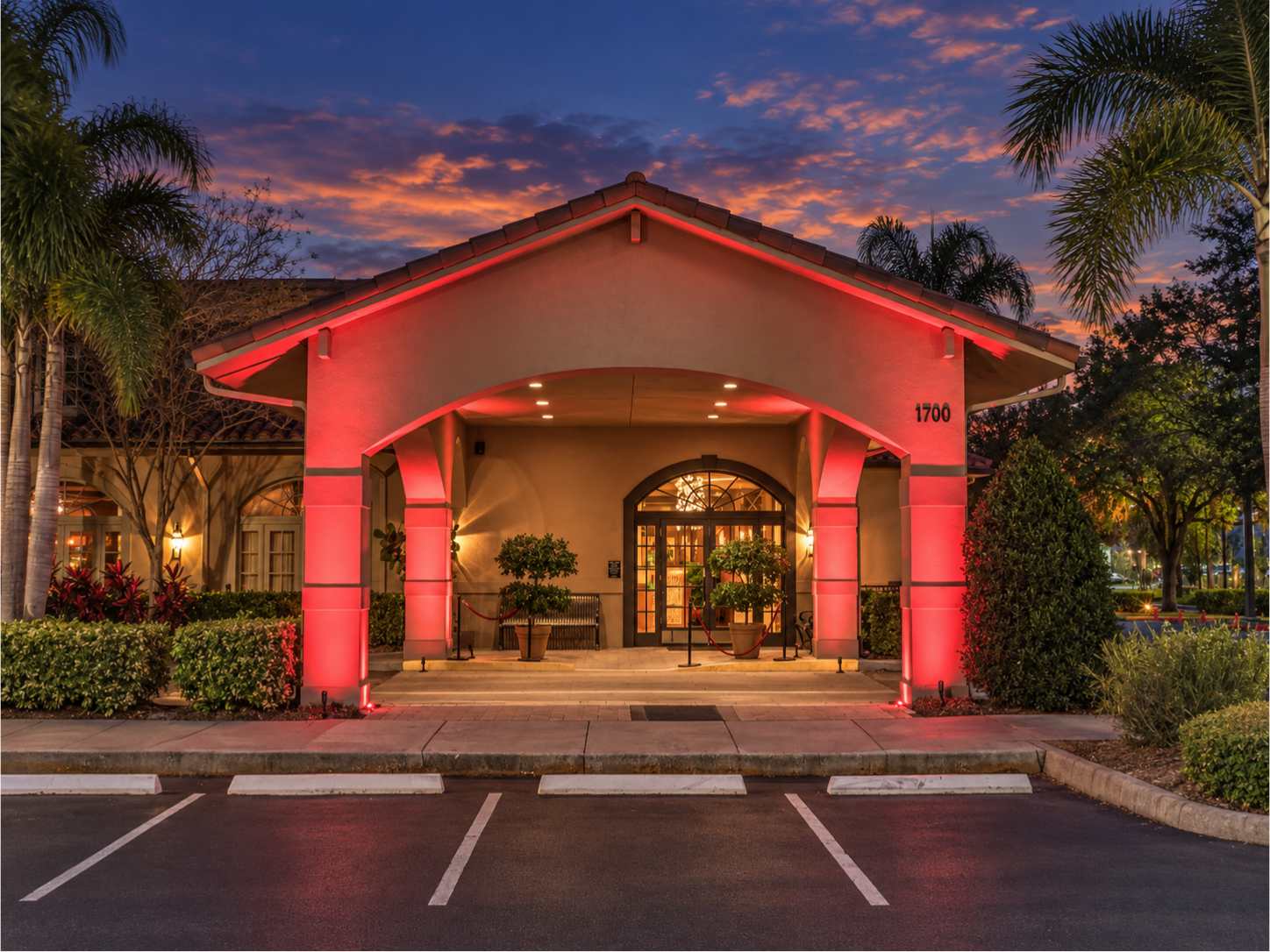
Commercial Christmas Light Installation Cost in Florida
How Much Does Commercial Christmas Light Installation Cost in Florida
The cost of commercial Christmas light installation in Florida depends on the property, the design and the level of seasonal service required. A smaller storefront may need a defined roofline, wreaths and garland. A larger commercial property may include multiple buildings, tall trees, entrances, landscaping, and freestanding holiday features.
Professional holiday lighting is also more than the installation itself. A complete commercial service can include custom design, commercial-grade products, installation, in-season maintenance, removal and organized storage. This guide explains the factors that shape a proposal so business owners, property managers and HOA boards can plan with greater confidence.
What Commercial Christmas Lighting Usually Costs
There is no single price that fits every commercial property. Smaller, focused displays commonly begin in the low thousands, while larger or more elaborate properties can require a significantly higher investment. Building height, installation access, tree work, specialty décor, electrical needs and the number of decorated areas all influence the final proposal.
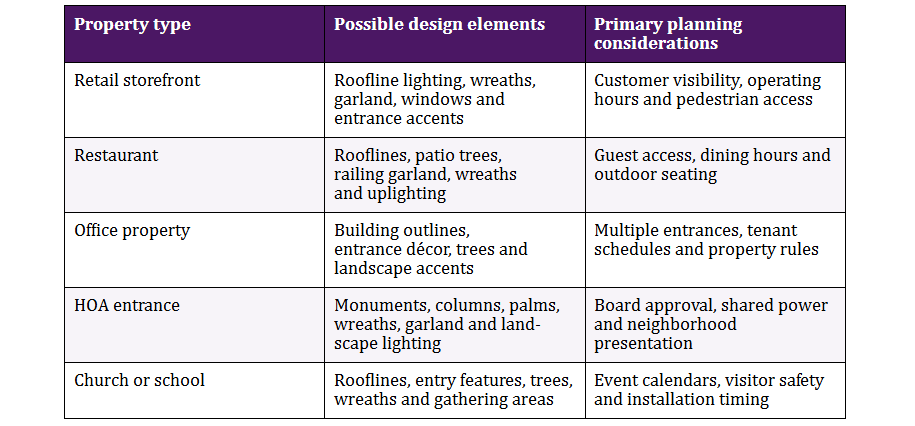
For planning purposes, it is more useful to think in terms of project scope than a price per bulb. A storefront roofline is a different installation from a multi-entrance HOA display or a restaurant with patio trees, garland, wreaths and architectural uplighting.
What Determines the Cost
Property size and design coverage
The amount of the property included in the display has the greatest effect on cost. A design may focus on one customer-facing entrance, or it may extend across rooflines, columns, windows, trees, signs and landscaped areas. More coverage requires additional product, labor, power planning and service time.
Building height and access
Single-story storefronts are generally more straightforward than tall rooflines, large trees or structures requiring specialized access equipment. Limited parking, busy walkways and restricted working hours can also affect installation planning.
Lighting and décor selections
Commercial displays can combine several design elements, including custom-fit roofline lighting, mini lights, tree wraps, wreaths, garland, stake lighting and architectural uplighting. Large wreaths, densely wrapped trees and specialty features generally require more product and installation time than a simple roofline.
Electrical distribution
A professional design must account for available outlets, circuit capacity, cord routing, timers and safe connections. Large properties may need multiple power zones or additional electrical planning before installation can begin.
Maintenance and seasonal service
Florida weather can bring rain, wind, humidity and occasional storms during the holiday season. A full-service proposal should clearly explain how service calls, adjustments and product failures are handled while the display is installed.
Removal and storage
Takedown and organized storage are important parts of a commercial program. Proper labeling and storage make future installations more efficient and help preserve a consistent appearance from one season to the next.
What a Professional Commercial Installation Includes
Before comparing proposals, confirm which services and products are included. A lower initial number may not represent the same scope of work.
A design created around the property, brand and viewing angles
Commercial-grade lighting and décor selected for the installation
Custom fitting for cleaner rooflines and architectural details
Professional installation with planned cord and power routing
Timers or operating controls when included in the design
In-season maintenance under the provider’s service terms
Scheduled takedown after the holiday season
Labeling and storage for future installations when included
Commercial Grade Lights Versus Store Bought Products
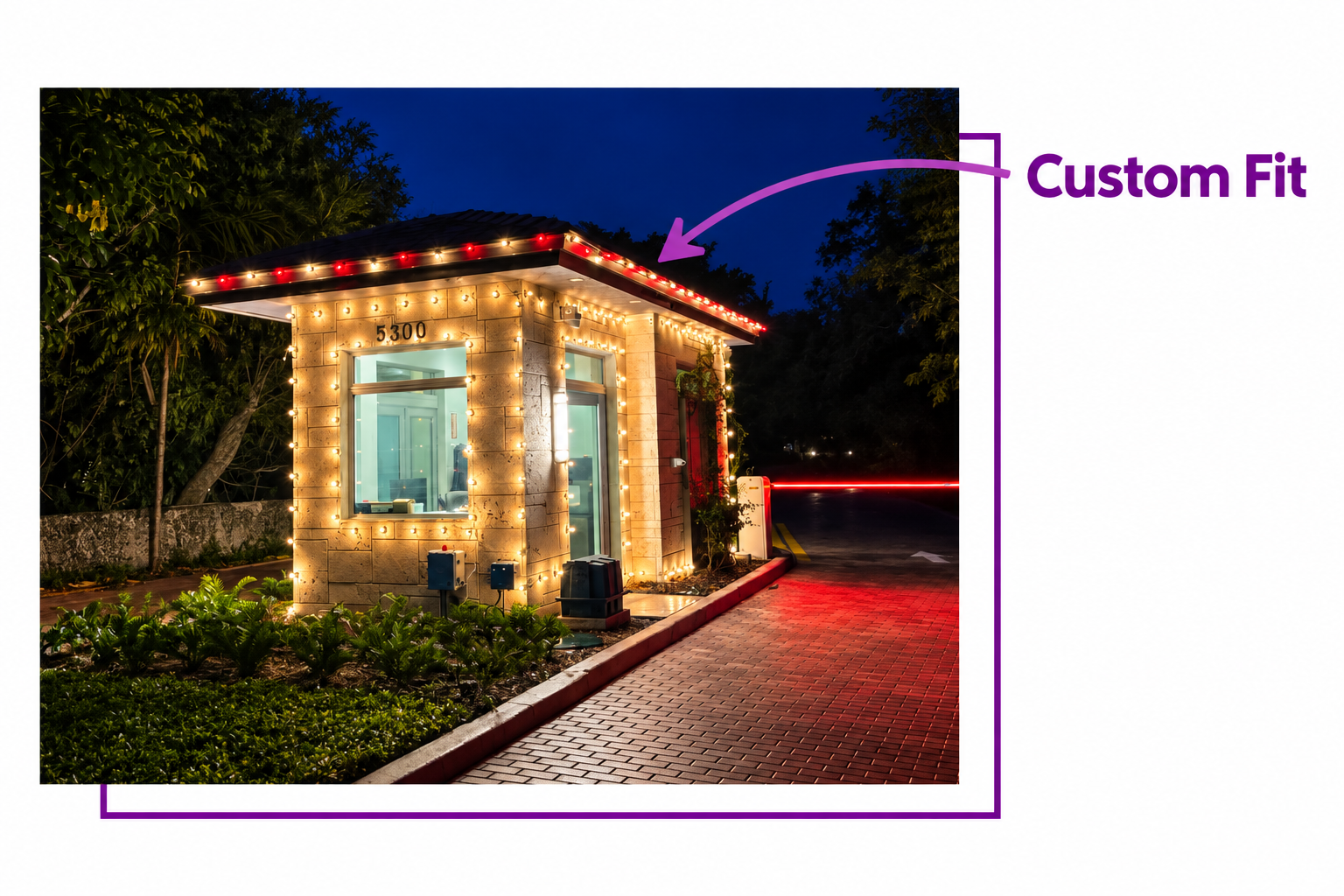
Commercial-grade products are chosen for consistent color, cleaner spacing, serviceability and repeatable installation. Roofline lighting can be custom fitted to the architecture instead of relying on predetermined retail strand lengths. Professional components also make it easier to repair individual sections and recreate the display in future seasons.
Store-bought lights can work for small DIY projects, but they are not always designed for the appearance, maintenance demands or repeat installations expected at a customer-facing property. Businesses should compare the complete result and service plan, not only the purchase price of the lights.
Should a Business Buy or Lease Its Holiday Display
Commercial lighting programs are structured differently by provider. Some proposals include seasonal use of the products as part of a full-service program, while others involve product ownership. The right structure depends on the design, storage responsibility, replacement terms and plans for future seasons.
Ask who owns the lighting and décor, what happens if a component fails, whether the design can change next season and whether storage is included. These details can matter as much as the first-year price.
When Florida Businesses Should Start Planning
Commercial properties benefit from starting earlier than residential customers. The design may need approval from an owner, board, property manager or corporate office. Product may also need to be reserved, and installation must be scheduled around business hours, tenant access and holiday events.
Beginning the conversation during late summer or early fall provides more time for design decisions and scheduling. Properties with large trees, multiple buildings, specialty décor or fixed event dates should begin even earlier when possible.
How the Commercial Design and Proposal Process Works
1. Property review: Sparkl reviews the property, desired areas, visibility, access and available photos.
2. Design direction: The display style, color palette and priority features are selected around the property and budget goals.
3. Proposal: The proposal defines the approved design, included services, seasonal terms and investment.
4. Scheduling and preparation: After approval and the required deposit, product is allocated and the installation is added to the seasonal schedule.
5. Installation and service: The display is installed, tested and supported during the season according to the proposal.
6. Takedown and storage: After the season, the display is removed and prepared for storage when included in the program.
How to Compare Commercial Lighting Proposals
A useful proposal should make the scope easy to understand. Before choosing a provider, ask:
Which exact areas and design elements are included?
Are the lights and décor supplied by the installer?
Who is responsible for troubleshooting during the season?
Are removal and storage included?
Are lift rentals, specialty equipment or electrical work included?
What deposit, approval and scheduling requirements apply?
Can the design be expanded or adjusted in a future season?
